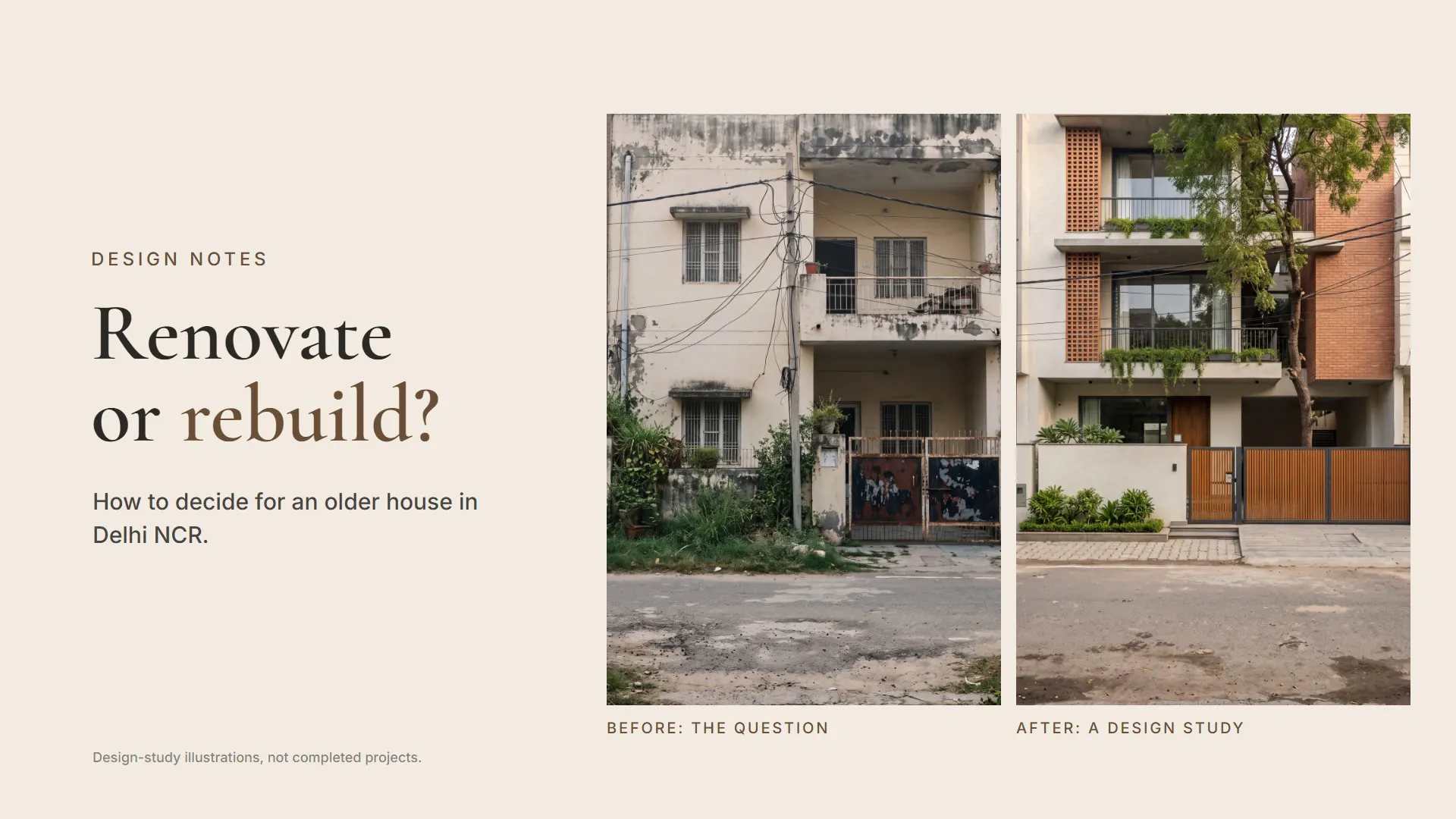
Many families in Delhi NCR live in a house built twenty or thirty years ago. It has served them well, but now the roof leaks in the monsoon, the wiring cannot take another air conditioner, the rooms are dark, and the layout no longer fits how the family lives. The question that follows is always the same: do we renovate, or do we rebuild?
There is no single right answer. It depends on the condition of the structure, what the family needs from the house for the next twenty years, and what the plot allows. Here is how we work through it with clients before anything is drawn.
1. Start with the structure, not the finishes
Peeling paint and old tiles are easy to replace. What decides the question is what you cannot see.
Before any design decision, we ask a structural engineer to assess the building: the condition of the columns, beams and slabs, signs of corrosion in the reinforcement, cracks and where they run, settlement, and how the house was built in the first place. If the structure is sound, renovation is usually a real option. If major repairs to the frame are needed, rebuilding often becomes the more sensible path.
2. Does the layout work for the next twenty years?
Write down how the family will use the house: who lives on which floor, whether parents need a bedroom on the ground floor, whether you want space for a home office, how many cars you will park.
Then look at the existing plan. Some layouts adapt well: a wall removed here, a staircase moved there. Others fight every change, especially when the load-bearing walls sit exactly where you need open space. When the list of changes starts to touch most of the house, the cost and disruption of renovation start to approach those of a new building.
3. Services: wiring, plumbing and drainage
In older houses the services are often the weakest part. Wiring sized for a few fans and lights, galvanised pipes, leaking concealed lines and drainage that no longer copes in heavy rain.
A full renovation usually means replacing most of these anyway, which involves opening walls and floors. Factor this into the comparison. A renovation that leaves old services in place is cheaper today and more expensive later.
4. Light, air and heat
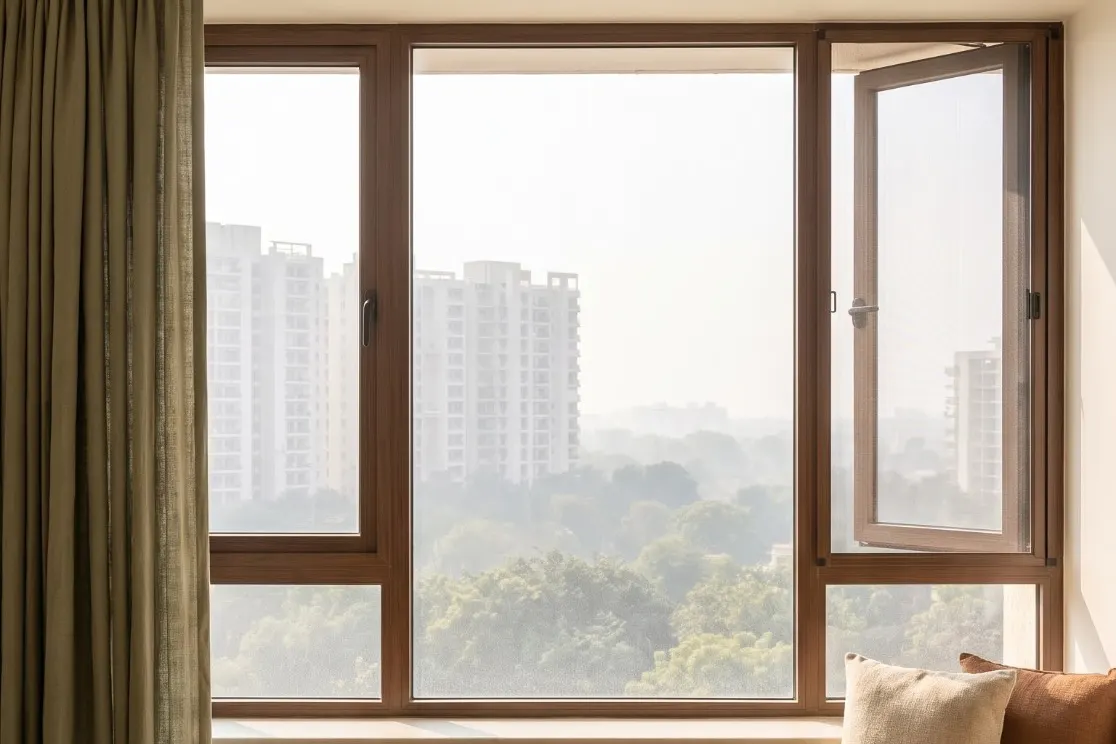
Older houses in Delhi NCR were often built with small windows, deep rooms and little thought for the afternoon sun. Ask how much of that renovation can change:
- Can you add or enlarge windows, or open a courtyard or skylight to light the middle of the house?
- Can you create openings on opposite walls so air moves through rooms?
- Can the roof be insulated and the west wall shaded?
Some of this is possible in a renovation. Some, like turning the house to face the light or adding a central courtyard, is far easier in a new design.
5. What does the plot allow today?
Building rules and approvals change over the years. A new building has to meet the current rules for your plot, which may affect setbacks, height, the number of floors and parking. In some cases a rebuild allows more usable area than the existing house; in others it may allow less, or impose new requirements.
Check this early with your architect, before you get attached to either option. It often settles the question on its own.
6. Time, disruption and where you will live
A focused renovation can sometimes be done in phases while part of the family stays in the house. A rebuild means moving out for the whole construction period, and that cost belongs in the comparison too: rent, storage, and a longer timeline.
7. Compare the full cost, honestly
Compare like with like. For renovation, include structural repairs, new services, waterproofing, windows and finishes, not just the visible work. For rebuilding, include demolition, the new structure, services, approvals and the cost of living elsewhere.
Then compare what you get at the end: the condition of the building, how long it will last, how well it suits the family, and how it will hold its value.
A quick way to think about it
Renovation may suit you better if:
- The structure is sound
- The layout needs adjustment, not reinvention
- You want to keep the character of the house, or stay in it during the work
Rebuilding may suit you better if:
- The structure needs major repair
- The family’s needs have changed so much that most of the plan must change
- The current rules allow a better building on the same plot
How we approach it
At Eco Essence Architects, we start with an assessment: the structure with an engineer, the plan, the services, light and air, and what the plot allows. Then we set out both options side by side, so the decision is made on evidence rather than on the condition of the paint.
Planning to renovate or rebuild a home in Noida, Gurugram or South Delhi? Call or WhatsApp us on +91 98100 95960.
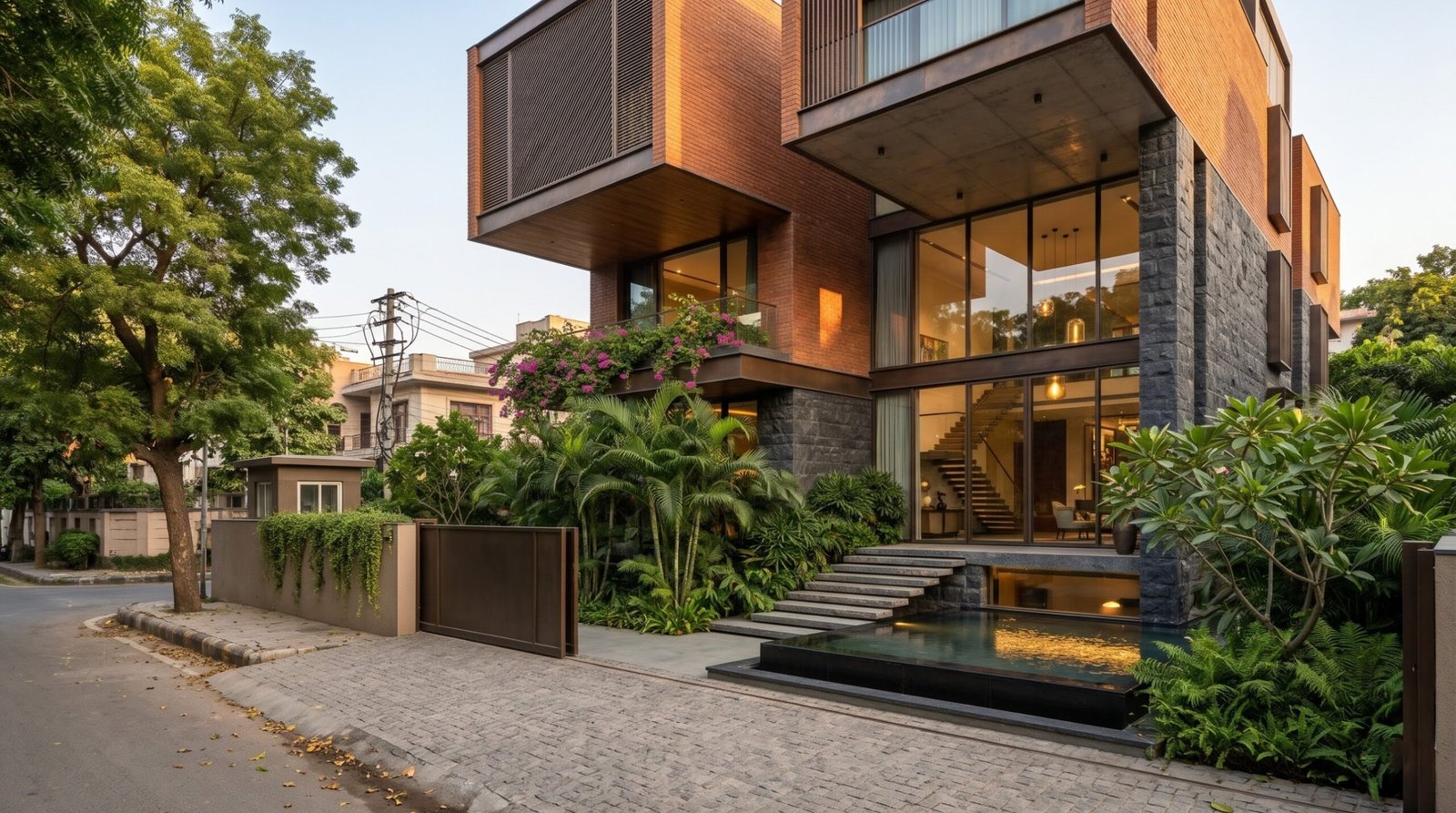
Images in this article are design-study illustrations, not photographs of completed Eco Essence projects. This article is general guidance; structural and approval questions need a site-specific professional assessment.